Ballito has a subtropical climate, which in plain terms means warm humid summers, mild dry winters, and sea that stays swimmable all year. The town works as a holiday base in every season, but what you get out of a trip depends a lot on when you come: December is all beach heat and crowds, winter is dry and quiet with whales offshore, and the shoulder months trade a little weather risk for far better value. This runs through the weather season by season with real numbers, then sorts out the best time to visit depending on whether you are here for swimming, wildlife, or a quiet, cheaper break.
Best time to visit Ballito: the quick answer
If you want the sweet spot, aim for the dry winter months from about May to September: mild clear days, sea still warm enough to swim, whales passing offshore, thinner crowds and lower prices. Come in December for classic hot summer beach weather, but expect the biggest crowds and the highest rates of the year. February is the quietest and best value, with the trade-off of warm, humid days and the odd afternoon thunderstorm. The rest of this guide breaks down each season and the best time for specific things.
Ballito weather by season
Here is what each season actually feels like on the ground, with the numbers that matter for planning.
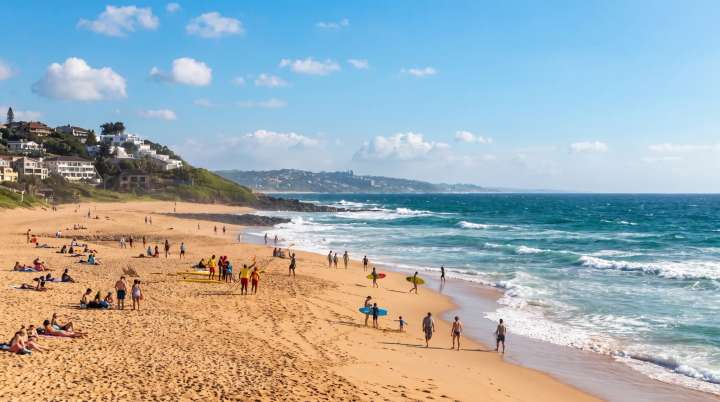
Summer (December to February) is warm to hot and humid, with daytime highs typically in the high 20s and touching 30 degrees Celsius. It is the wettest time of year, with most rain arriving as short, heavy afternoon thunderstorms that clear as fast as they build rather than washing out whole days. This is peak holiday season: the beaches are full, the town is at its liveliest, and accommodation is at its priciest, especially over the December school holidays and New Year.
Autumn (March to May) is one of the best-kept secrets of the North Coast. The heat and humidity ease, the summer crowds thin out, and the sea stays warm from the long summer. Days are comfortable and mostly clear, and prices drop from the December peak, which makes autumn a strong pick for a relaxed beach holiday.
Winter (June to August) is mild and dry, with daytime temperatures usually in the low to mid 20s and cooler evenings. June and July are the driest months by a clear margin. The sea stays around 21 to 22 degrees, cool but still swimmable for most, and this is prime whale-watching season. Winter is the value season: clear weather, quiet beaches and lower prices, which is why it is the sweet spot for many visitors.
Spring (September to November) warms up again, the whales are still passing early in the season, and the water heats back toward summer temperatures. October and November can bring the first summer storms and some wind, but spring is largely a pleasant, warming shoulder season before the December rush arrives.
The sea and swimming
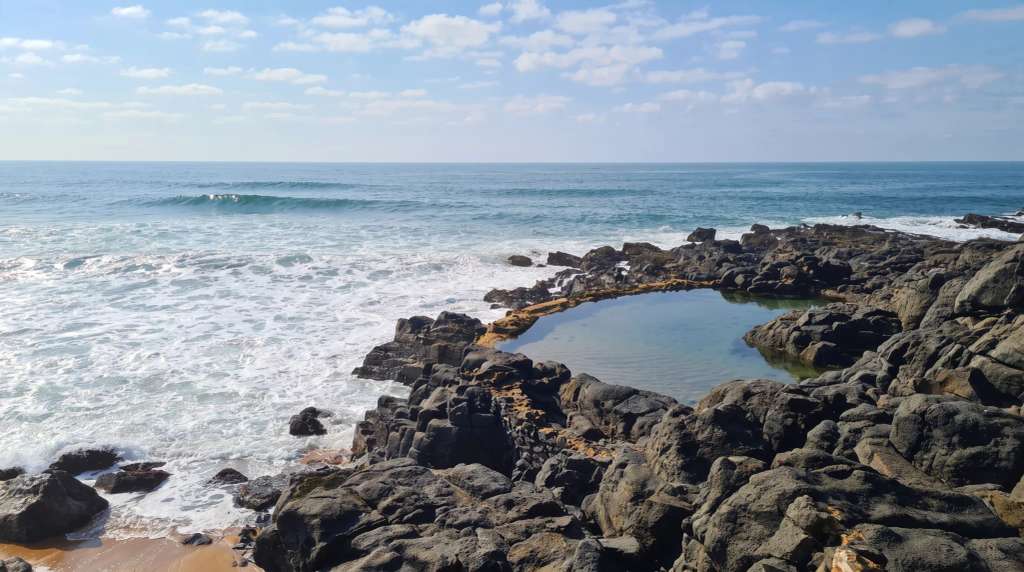
One of Ballito's best features is that the Indian Ocean here stays warm year-round, sitting between roughly 21 and 25 degrees Celsius, so the swimming season never really closes. Summer gives you the warmest water at the top of that range; even mid-winter it rarely drops below about 21 degrees, which surprises first-time visitors used to colder coasts. The main beaches are protected by shark nets and patrolled by lifeguards in season, and on days when the surf is up, the tidal pools give you calm, safe water. The beaches and tidal pools guide covers which is which and where to swim.
What is on when: whales, events and harvests
The calendar shapes the trip as much as the weather. Whale migration season runs from about June to November, when humpback and southern right whales pass offshore on their annual journey, best spotted in winter and early spring from the shore or a boat trip. The North Coast strawberry season runs roughly September to December, and the area's markets and farm shops shift with it. Ballito's own surf calendar peaks in winter, when a major professional surfing event has historically been held on the main beach around June or July, though the exact dates move year to year, so check the year's schedule if you want to build a trip around it. The festive season from mid-December brings the biggest domestic crowds of the year, worth knowing whether you want to be in the thick of it or avoid it.
Best time for whales, swimming, value and families
Pick your season by what matters most. For whales, come between June and November, with winter giving the clearest viewing. For the warmest swimming and full summer beach energy, December to February, accepting the crowds and prices. For value and quiet, the winter and shoulder months from May to September deliver good weather at lower rates. For families, the school-holiday periods line up with summer and make the beaches lively, but autumn and winter offer safer, calmer swimming and more relaxed days if your dates are flexible. For the best all-round balance, most locals would point you at May, June or September.
What to pack
Whatever the season, the subtropical sun is strong, so pack proper sun protection: high-SPF sunscreen, a hat and sunglasses matter even in winter. Bring lightweight summer clothing for the warm days, and add a light layer for cooler winter evenings from June to August. If you are visiting in the wetter summer months, throw in a light waterproof or a compact umbrella for those quick afternoon storms. And pack swimwear no matter when you come, because the sea is warm enough to use in every season. With the timing sorted, the town's things to do and where to stay are the natural next steps.
Common questions about Ballito weather and timing
The dry winter months from May to September are the best all-round time to visit, whales pass from June to November, the sea stays swimmable at 21 to 25 degrees year-round, and most rain falls as short summer afternoon storms. Pack sun protection in any season. Full answers are in the FAQ block below.
Frequently asked questions
Published September 8, 2026