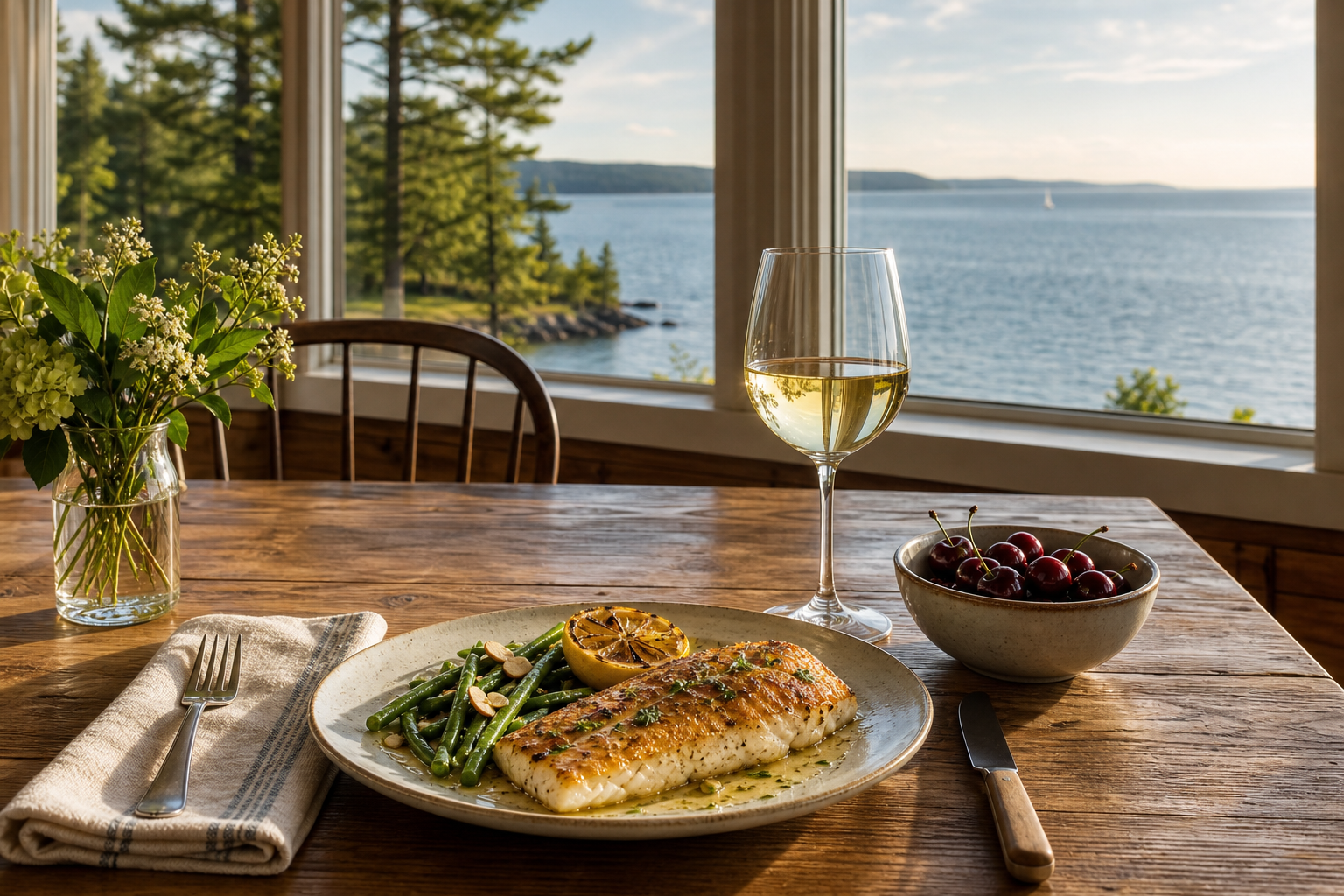
The most rewarding meals in Traverse City lean into what the region actually produces: lake fish, tart cherries, and wine grown on peninsulas that jut into the bay.
Find your next Traverse City meal right here
Explore Traverse City's restaurant listings on Local Eyes and find the right spot for tonight.
Why Traverse City has a genuinely distinctive food scene
Traverse City sits on Grand Traverse Bay, an inlet of Lake Michigan, and that geography shapes everything on the plate. The same lake effect that moderates the climate also makes the surrounding peninsulas ideal for growing wine grapes, and Michigan produces over 70% of the national tart cherry crop, with the Grand Traverse region at the center of that output. These are not decorative local touches: cherries, whitefish, and peninsula wines turn up on menus across every price point, from casual lunch counters to chef-owned dining rooms. The city is, by local reputation, not a destination for chain restaurants but for discovering something new at independently owned spots scattered across downtown and beyond.
The ingredients that define what you will actually eat
Three ingredients come up again and again when locals talk about eating here. First, Great Lakes whitefish: caught from clean local waters, it appears grilled, pan-seared, and smoked across dozens of menus, alongside trout, salmon, and steelhead from Grand Traverse Bay. Second, cherries: tart cherries show up in sauces, salad dressings, cocktails, and desserts, and the region's annual National Cherry Festival draws roughly 500,000 visitors in the final days of June and first days of July. Third, wine: the Traverse Wine Coast on the Leelanau and Old Mission peninsulas is home to more than 50 wineries producing Riesling, Chardonnay, and Pinot Gris from estate-grown grapes, and many restaurants carry local pours as a matter of course. If you want to explore those wineries directly, the local farmers markets and producers guide is a useful companion.
Where restaurants are concentrated and what styles to expect
Downtown Front Street and the blocks immediately surrounding it hold the densest concentration of restaurants. The range is genuinely wide: upscale trattorias, farm-to-table bistros, rustic American gastropubs, quirky cafes, and breweries, some in buildings with real character. North Peak Brewing Company operates inside a 125-year-old former candy factory on Front Street, and The Filling Station Microbrewery is housed in a converted train depot. Italian cuisine anchors the old State Hospital Building 50 at The Village. Restaurants also extend along the Old Mission Peninsula, where winery dining rooms add another layer to the scene. The dining landscape does shift: 2025 saw notable closures including Blue Tractor after 19 years, alongside new openings like The Dandy on Front Street, so it is worth checking current listings before you go.
Summer versus off-season: what changes and what to plan for
Peak season runs roughly from late June through August, when the National Cherry Festival and summer tourism push the city's population and restaurant demand sharply upward. During this window, reservations at popular spots are strongly recommended, sometimes days or a week in advance for dinner. The off-season is quieter and more relaxed, but some restaurants reduce their hours or close temporarily between November and April. If you are visiting outside summer, it is worth calling ahead or checking current hours rather than assuming a place is open. The flip side is that shoulder-season dining, particularly in September and October during harvest time, can be one of the most rewarding times to eat here, with local produce at its peak and fewer crowds competing for tables. For a comparison of how other Midwestern and regional cities handle their dining scenes, the Sioux Falls restaurant guide offers a useful contrast.
How to use local listings to find what fits your visit
With a scene that changes season to season, a reliable local directory matters more than a static list. Local Eyes organizes Traverse City restaurants by type and neighborhood, with current listings that reflect actual operating businesses rather than outdated roundups. Checking a local platform before you arrive lets you filter by cuisine style, read recent activity, and spot new openings like The Dandy that may not yet appear in major travel publications. If your trip includes other stops in the region, guides for comparable food-forward cities such as the Charleston dining guide or the New Orleans restaurant guide follow the same format and make cross-city planning straightforward.
How to plan a great meal in Traverse City
- 1
Decide on your dining priority
Are you after a waterfront view, a specific ingredient like whitefish or cherry-forward dishes, a brewery experience, or a wine-pairing dinner? Traverse City's range is wide enough that narrowing your priority first saves time. Farm-to-table bistros, gastropubs, and winery dining rooms each offer a meaningfully different experience, so knowing which matters most to you shapes everything else.
- 2
Check the season and current hours
Summer is peak season: restaurants fill quickly, hours are extended, and the National Cherry Festival week in late June and early July brings an especially large influx of visitors. Off-season, particularly November through March, some restaurants reduce hours or close temporarily. Always verify current hours directly with the restaurant or through a current local listing before making plans.
- 3
Book reservations early for peak periods
During summer and festival weeks, reservations at popular spots can fill days in advance. Book as early as your plans allow, especially for dinner at chef-owned or upscale restaurants. For casual spots, breweries, and lunch, walk-ins are more reliably available, but even these can see waits on busy summer evenings.
- 4
Explore beyond Front Street
Downtown Front Street is the obvious starting point, but the Old Mission Peninsula adds winery dining rooms with views over the bay, and neighborhoods just off the main strip hold some of the city's most distinctive spots. The converted train depot and the old State Hospital building are two examples of venues where the setting is as much a part of the meal as the food.
- 5
Order what the region actually produces
The most rewarding meals in Traverse City tend to lean into what is genuinely local: Great Lakes whitefish and trout, tart cherry preparations, and wines from the Leelanau or Old Mission peninsulas. These are not novelty items here; they are the backbone of the regional kitchen. Asking your server what is locally sourced that day is a reliable way to eat well.
Benefits
Genuinely local ingredients on every menu
Traverse City restaurants draw on a remarkable concentration of regional produce. Michigan supplies more than 70% of the nation's tart cherry crop, and Great Lakes whitefish, local wine grapes, and fresh produce from nearby farms give menus here a specificity you do not find in most tourist towns.
A dining scene built on independent restaurants
The city is recognized for its independently owned, chef-driven restaurants rather than chains, which means menus change with the season and with what local farmers and fishers are bringing in. That independence also means the scene evolves quickly, with new openings regularly refreshing the options.
Historic venues that add context to the meal
Several of Traverse City's most distinctive restaurants occupy buildings with real history: a 125-year-old candy factory, a converted train depot, and a former state hospital building. The setting itself becomes part of the experience in a way that a purpose-built dining room rarely achieves.
Wine country access built into the dining scene
With more than 50 wineries across two American Viticultural Areas on the Leelanau and Old Mission peninsulas, local wine pairings are a genuine strength of the dining scene here, not an afterthought. Many restaurants carry estate wines from nearby producers as a standard part of their list.
Dining situations visitors actually face here
A couple planning a summer anniversary dinner
A couple visiting during July wants a memorable dinner with local wine and fresh fish. The National Cherry Festival is underway, the city is at peak capacity, and the restaurants they have in mind are fully booked two nights out. Booking a week in advance and specifically requesting a table at a chef-owned spot with a local wine list is the right move. Checking a current local directory rather than a travel article from two years ago helps confirm the restaurant is still operating and still taking reservations.
A group visiting in October for the harvest season
A group of four arrives in mid-October expecting the same energy as summer and finds a quieter, more relaxed city. Several restaurants have shifted to reduced hours, but the ones that are open are less crowded and the local produce, including late-harvest cherries and fresh-pressed apple products, is at its best. Shoulder-season dining rewards flexibility: calling ahead to confirm hours and asking what is freshest that week tends to produce the best meals.
A solo traveler curious about the brewery scene
A solo visitor wants a casual evening without the formality of a reservation. Traverse City's brewery scene, including spots like North Peak Brewing in its historic candy factory building and The Filling Station in a converted train depot, offers walk-in-friendly dining with genuine local character. These venues pair well-made food with Michigan craft beer and tend to have bar seating available even on busy nights.
A local resident looking for something new to try
A longtime resident has eaten at the same rotation of spots for years and wants to find what has opened recently. The 2025 dining season brought notable closures and new openings, meaning the local scene looks meaningfully different from even a year ago. Using a current local directory rather than relying on memory or outdated lists is the most practical way to discover what is actually open, what is new, and what the current buzz is around a place like The Dandy on Front Street.
Traverse City restaurants: questions locals and visitors ask
Browse Traverse City restaurants on Local Eyes
Traverse City's restaurant scene changes with the seasons, and a current local directory is the most reliable way to find what is actually open and worth your time right now. Browse the Traverse City restaurant listings on Local Eyes to find spots by style, neighborhood, and what locals are talking about this week.